MISFIT Touch Lamp Circuit | DIY Touch Sensor Light Switch | Simple Electronics Project
2026-07-03
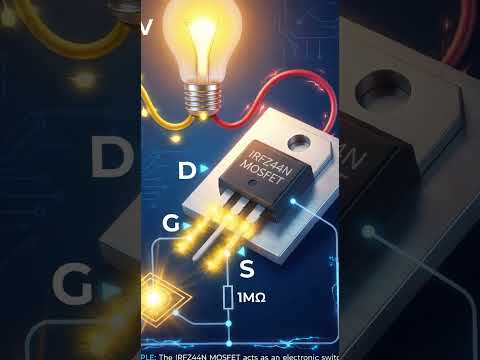
Channel: Energy Science (349 subscribers)
Note: today's crop was almost entirely YouTube Shorts, so this is the least-bad pick — it's the one candidate framed as an actual tutorial rather than a hashtag-heavy Short.
Touch-activated switches are one of those circuits that feel like magic the first time you build one, but the underlying principle is genuinely useful to understand: your body acts as a small antenna picking up ambient 50/60 Hz mains hum, and that tiny signal is enough to bias a high-gain transistor stage into conduction. Once you understand that trick, you see it reused everywhere — from capacitive touch pads to proximity sensors.
A well-made version of this project should walk through the touch plate arrangement, the Darlington pair or high-gain transistor stage that amplifies the induced signal, and the latching behavior that keeps the lamp on after your finger lifts. It's a good gateway into thinking about signal amplification, biasing, and input impedance — concepts that transfer directly to sensor interfacing later on.
For a beginner, this is a satisfying afternoon build with a handful of common parts (transistors, resistors, a relay or SCR, and an LED or bulb), and it produces a real working object you can bolt into a lamp housing.
