How to Mill Your Own PCB: Gerber to CNC in FlatCAM (Cubiko CNC)
2026-09-03
Channel: Tasty Tech Harbour (4640 subscribers)
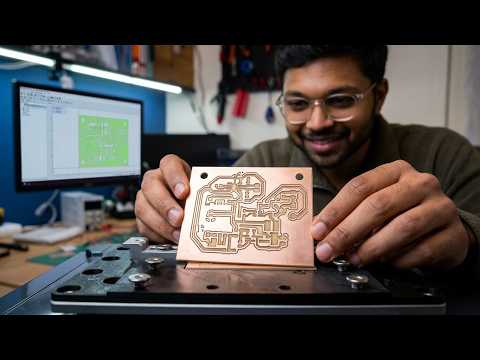
Home PCB fabrication is one of those skills that sits at a genuinely useful intersection of electronics, CAD, and CNC machining — and this video walks through the specific choke point where most hobbyists get stuck: translating Gerber and Excellon drill files into actual CNC toolpaths a mill can execute.
FlatCAM is the de facto open-source tool for this job, but it's notoriously fiddly. You have to think about isolation routing (the width and number of passes around each trace), tool diameter compensation, cut depth for the copper layer versus the board outline, drill sequencing, and how to align the double-sided workflow if you need it. Getting any one of those wrong produces either shorted traces, lifted copper, or broken end mills.
A step-by-step walkthrough tied to a real machine (the Cubiko CNC) is valuable because it grounds the abstract FlatCAM settings in concrete choices — feed rates, spindle speeds, and end mill selection that actually work rather than theoretical defaults. For anyone who wants faster iteration than mail-order fab houses allow, or who wants to prototype RF and analog boards where turnaround matters, this is the exact skill to learn.
Bonus: milling teaches you to respect trace width and clearance rules in a way that ordering boards never does.
