Can We Measure How Fast the Universe Is Expanding? | Sleep Science
2026-05-27
Channel: Genius Night Science (213 subscribers)
Of the candidates on offer, this one is the clearest fit for genuine educational content. It tackles the Hubble tension — one of the most important unresolved puzzles in modern cosmology — framed as calm, narrated "sleep science" suitable for low-stimulation viewing.
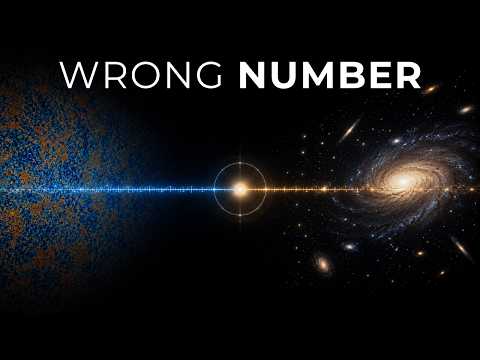
The premise is deceptively simple: how fast is the universe expanding? Two independent measurement routes give two different answers. One path uses the cosmic microwave background — the faint afterglow of the Big Bang — combined with the standard cosmological model to predict an expansion rate. The other path measures expansion directly today, using Cepheid variable stars and Type Ia supernovae as "standard candles" to build a distance ladder out into the local universe.
The two numbers should agree. They don't. The gap has only widened as instruments like Hubble and JWST have sharpened the measurements, suggesting either a hidden systematic error or — far more excitingly — missing physics in our model of the cosmos. Possibilities on the table include early dark energy, exotic neutrino behavior, or a tweak to gravity itself.
The "sleep science" framing means it's slower-paced than typical YouTube explainers, but for a 213-subscriber channel covering real frontier cosmology rather than recycled clickbait, it's a quiet gem worth the visit.
