Tank Farm Design Basics: Storage & Layout Principles Explained (API NFPA SHA EPA OISD)
2026-08-23
Channel: GMP GUIDE | Your Career Guide (2300 subscribers)
Most of the candidates in today's batch are variations on the same theme: short 3D animations explaining a single mechanical component (hydraulic jack, centrifugal pump, fluid coupling, brake mechanism). Useful primers, but you've likely seen the same explanations a dozen times. This one is different — it tackles a real industrial design discipline rather than a single component.
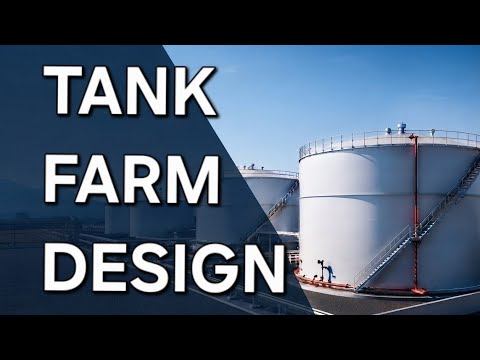
Tank farms are the sprawling clusters of cylindrical storage vessels you see at refineries, terminals, and chemical plants. Designing one is a genuinely hard engineering problem that sits at the intersection of fluid mechanics, fire safety, environmental regulation, and site logistics. The video walks through the layout principles that govern how tanks are spaced, bunded (surrounded by containment dikes), and grouped — driven by codes like API 650, NFPA 30, and OISD-118.
What makes this worth watching is that it explains the why behind the rules: minimum inter-tank spacing exists because radiant heat from a burning tank can ignite its neighbor; dike capacity is sized for the largest tank plus rainfall margin; product segregation prevents incompatible chemicals from mixing during a spill. These are the kinds of constraints that never appear in a component animation but define how real plants get built.
Good pick if you're curious about the codes-and-standards side of industrial engineering rather than pure mechanism explainers.
