HOW TO MEASURE UNKNOWN FREQUENCY USING (CRO) CATHODE RAY OSCILLOSCOPE
2026-06-08
Channel: GURUDEV ELECTRONICS (467 subscribers)
Measuring an unknown frequency with a CRO is one of those classic lab exercises that teaches you to actually read what an oscilloscope is showing you, rather than just trusting an auto-measurement readout. This video walks through the fundamental technique: setting the timebase, counting divisions per cycle, and computing frequency from the period (f = 1/T).
The reason this matters even in 2026, when most bench scopes have a "Measure → Frequency" button, is that the manual method forces you to understand the relationship between the horizontal sweep rate, the displayed waveform, and the underlying signal. When your auto-measurement reads something nonsensical — because of aliasing, a noisy trigger, or a harmonic-locked display — you need to fall back on counting graticule divisions to sanity-check what's really there.
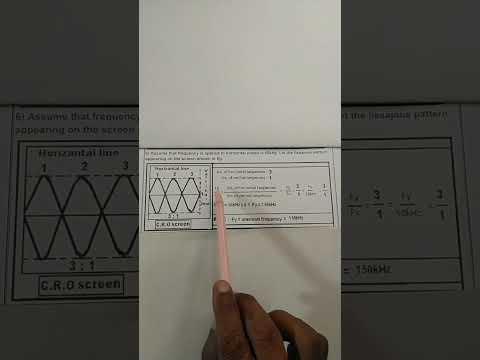
For students or hobbyists getting their first scope, this kind of foundational walkthrough is more useful than a feature tour of a fancy DSO. It also touches on the Lissajous-figure method in some treatments, where you compare an unknown signal against a known reference on the X and Y inputs — a beautiful technique that still appears in calibration work.
Small channel (467 subs), no description, so quality is unknown going in, but the topic itself is solidly educational.
