Pneumatic Circuit Design Using 5/2 DCV | FluidSIM Step-by-Step Tutorial
2026-07-12
Channel: learning with DIS (315 subscribers)
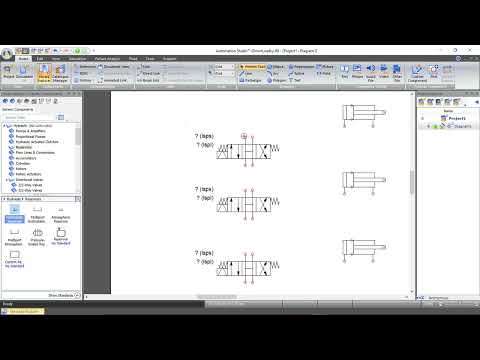
Pneumatics sits in an awkward spot for most electronics hobbyists — we know Ohm's law cold but freeze up when asked to read a schematic full of triangles, arrows, and spring symbols. This tutorial walks through building a working circuit around a 5/2 directional control valve (five ports, two positions) inside FluidSIM, which is the de-facto simulator for fluid power coursework.
The 5/2 DCV is the pneumatic analogue of a DPDT switch driving an H-bridge: it routes supply air to one side of a double-acting cylinder while venting the other, then swaps on actuation. Understanding why it needs five ports (supply, two working lines, two exhausts) rather than four is one of those small conceptual clicks that makes every downstream circuit — sequential actuation, memory circuits, cascade systems — suddenly readable.
FluidSIM itself is worth the price of admission: you can drag components onto a schematic, wire them, and watch the cylinder actually extend and retract in animation, with pressure and flow annotated live. It's a fantastic sandbox for learning without a compressor and a bench full of fittings. A small-channel tutorial that teaches a specific tool plus a specific canonical circuit is exactly the kind of focused content that's hard to find on the algorithm-driven front page.
