iPhone 14 Pro Max No Touch: Oscilloscope vs. Diode Mode (Finding the Hidden Short!)
2026-07-05
Channel: BoardRev (4290 subscribers)
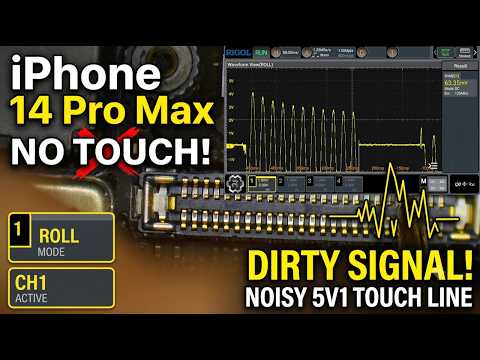
Board-level repair videos are one of the best ways to see practical electronics diagnosis in action, and this one from BoardRev tackles a genuinely tricky case: an iPhone 14 Pro Max with a completely unresponsive touchscreen that another shop couldn't fix.
What makes this video worth watching is the direct comparison of two diagnostic techniques: using a multimeter's diode mode versus using an oscilloscope to hunt down a short circuit on a dense, multilayer PCB. Diode mode is the go-to first pass for most repair techs — quick, cheap, and effective for finding dead shorts — but it has real limitations when a fault is intermittent, partial, or hidden behind active components. Seeing when and why to reach for the scope instead is the kind of practical knowledge that's hard to get outside of an apprenticeship.
You'll pick up transferable skills here even if you never touch an iPhone: probing techniques on tiny 0201 components, interpreting waveforms from touch controller lines, and the general logic of narrowing down a short from a whole rail to a single component. The channel is small (~4.3k subs) but the production and technical depth punch well above that.
